繁体中文
繁体中文 简体中文
简体中文
Is the solar aerator really reliable? Real effect evaluation
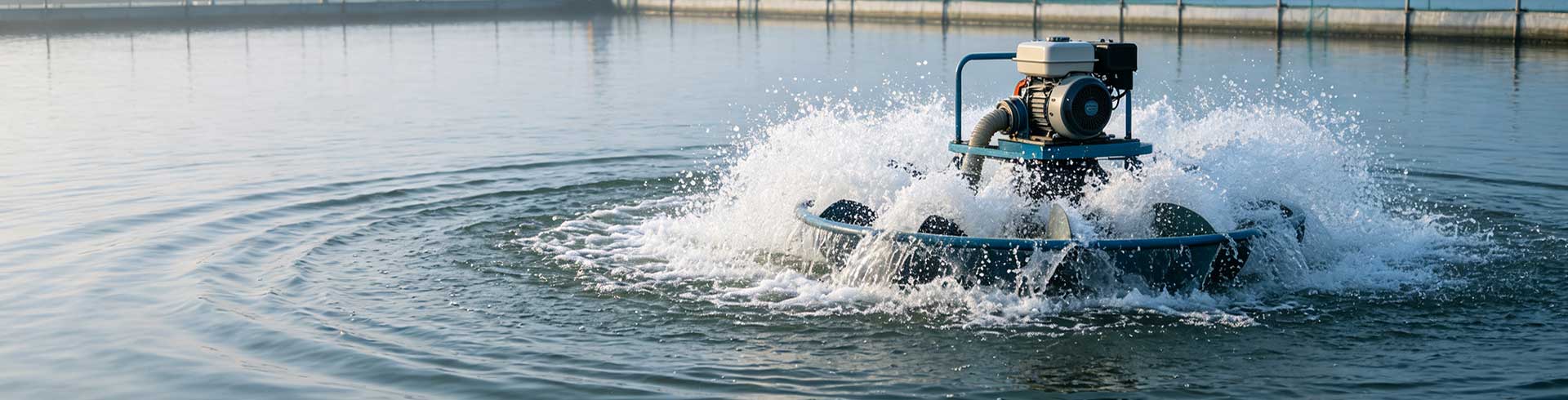
In recent years, with the popularity of the concept of green farming, solar aerators have gradually entered the field of vision of aquaculture farmers. It is known as "zero electricity bill, no wiring, intelligent oxygenation", but many farmers still have doubts: Is solar aerators really reliable? Can the actual oxygenation effect be comparable to traditional aerators? This article will bring you a comprehensive evaluation from the working principle, performance comparison, advantages and disadvantages, real user feedback and purchase suggestions.
First, the working principle of solar aerator
The solar aerator is mainly composed of a solar panel, a controller, a battery and an aerator pump (or impeller). During the day, the solar panel converts light energy into electrical energy, part of which directly drives the aerator to work, and the other part is stored in the battery for use at night or on rainy days. The controller is responsible for managing the charging and discharging process to ensure the stable operation of the system.
Second, the performance comparison with traditional aerators
In order to intuitively reflect the differences, we selected three common types of aerators on the market for comparison: traditional impeller aerators (1.5kW), microporous aerated aerators (1.5kW), and solar aerators (power equivalent 1.5kW).
| comparison term |
Traditional impeller type |
Microporous aeration |
Solar aerator |
|---|---|---|---|
| Oxygenation efficiency (kgO _ 2/kWh) |
1.2-1.5 | 2.0-2.5 | 1.8-2 (when there is enough light) |
| energy cost |
High (dependent on mains) |
High (dependent on mains) |
Zero electricity bill (sunny day) |
| installation complexity |
Wire to be distributed |
Wire to be distributed |
No wiring required, flexible |
| noise |
larger |
smaller |
Smaller (night battery powered) |
| Maintenance cost |
Higher (motor vulnerable) |
Medium (requires cleaning of aeration tray) |
Lower (solar panels need to be cleaned) |
| applicable scenario |
Large pond |
high density aquaculture |
Remote areas without electricity, small water surfaces |
From the table, it can be seen that solar aerators have obvious advantages in energy consumption and installation, but the aerobic efficiency is greatly affected by the weather, and the output power will decrease in continuous rainy days or when there is insufficient sunlight in winter.
III. Analysis of advantages and disadvantages
advantage
- Energy conservation and environmental protection:
Utilizing solar energy, the operating cost is almost zero, in line with the trend of green farming. - Easy to install:
No need to lay cables, suitable for remote ponds or areas with complex terrain. - Intelligent control:
Most products are equipped with an automatic start-stop function, which can operate automatically according to the amount of dissolved oxygen or light intensity. - Low Noise:
No mains motor noise, little disturbance to farmed animals.
disadvantage
- Due to weather conditions:
Insufficient power generation on rainy days or in winter may lead to insufficient oxygenation. - Initial investment is high:
The cost of solar panels, batteries, etc. is higher, and the recovery cycle is longer. - Power Limits:
At present, the power of solar aerators on the market is generally too small, making it difficult to meet the demand for high-density farming. - Battery life:
Batteries need to be replaced regularly, which increases the cost later.
IV. Real user feedback and cases
We interviewed a number of farmers who use solar aerators, and the following are typical evaluations:
- Master Wang, a river crab farmer in Jiangsu: "I have used it for two years and the effect is good, especially on sunny days, but when it is rainy continuously, I will turn on the backup diesel aerator."
- Boss Li, a tilapia farmer in Guangdong: "After installation, the electricity bill will be saved a lot, but the initial investment will be large, and it will take about 3 years to recover."
- Xiao Zhang, a shrimp pond farmer in Anhui: "The solar aerator is suitable for small water surfaces. My shrimp pond is not large enough."
Evaluation summary and recommendation
Overall, the solar aerator is indeed reliable in specific scenarios, but it is not a panacea. It is more suitable for the following situations: - small ponds with a farming area of less than 5 acres; - far away from power grids or areas with unstable electricity; - varieties with low farming density and low demand for dissolved oxygen; - sufficient funds, focusing on long-term environmental benefits.
For large farms or high-density farming, it is recommended to use a traditional aerator or mix and match. When purchasing, pay attention to: - choose a regular manufacturer to ensure the conversion efficiency of solar panels and battery quality; - match the power according to the depth and area of the pond; - ask if it supports automatic switching of mains functions on rainy days.
Final score (out of 5 stars): - Energy efficiency: - Oxygen enhancement performance: - Stability: - Cost performance: - Recommended index:
If you are a small farmer and the local sunshine is sufficient, the solar aerator is worth trying; otherwise, it is recommended to choose carefully. For more aerator purchase guidelines, please consult our customer service.