繁体中文
繁体中文 简体中文
简体中文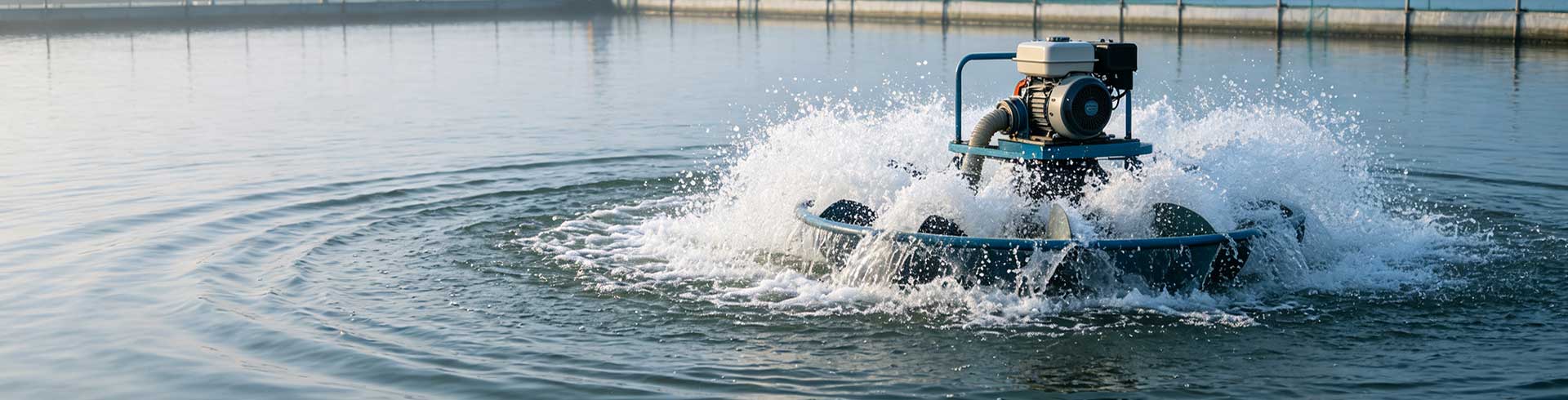
-
How to choose the right aquaculture aerator for your farm?
Choosing the right aerator depends on several factors: pond size, water depth, stocking density, and the species you are farming. For standard freshwater fish ponds, a paddle wheel aerator at 0.3-0.5 kW per mu (667 m²) is generally sufficient. For high-density shrimp farming, 1.0-1.5 kW per mu is recommended. Submersible aerators work best for deep ponds, while paddle wheel aerators are ideal for shallow, large-surface ponds. Our technical team can provide customized recommendations based on your specific conditions. -
What are the differences between paddle wheel aerators and submersible aerators?
Paddle wheel aerators work by rotating paddles on the water surface to create waves and splash, promoting oxygen transfer from the air into the water. They are best suited for large, shallow ponds. Submersible aerators are placed at the bottom of the pond and push air through diffusers, creating fine bubbles that dissolve oxygen efficiently at greater depths. Submersible aerators are quieter and more suitable for deep ponds or indoor aquaculture systems. Each type has its advantages depending on your farming environment. -
How does an aquaculture aerator improve fish and shrimp survival rates?
Dissolved oxygen is the most critical water quality parameter in aquaculture. When oxygen levels drop below 3 mg/L, fish become stressed and stop feeding. Below 2 mg/L, mass mortality can occur. Aerators maintain optimal oxygen levels (above 5 mg/L) throughout the pond, prevent thermal stratification, and promote circulation of nutrients. This leads to healthier aquatic life, faster growth rates, and significantly higher survival rates — often improving yields by 20-30% compared to non-aerated ponds. -
What are the advantages of solar-powered aquaculture aerators?
Solar-powered aerators offer several key advantages: zero electricity costs, making them ideal for remote farming areas without reliable power supply; environmentally friendly operation with no carbon emissions; low maintenance requirements since they have fewer mechanical parts; and automatic operation during daytime when photosynthesis stops and oxygen demand is high. Our solar aerators include battery storage systems that can continue operating for 4-6 hours after sunset, covering the critical early morning period when dissolved oxygen is typically at its lowest. -
How often should aquaculture aerators be maintained?
Regular maintenance is key to ensuring aerator longevity and performance. We recommend the following schedule: daily visual inspections for abnormal vibration or noise; monthly checks on impellers, floats, and anchor cables for wear or damage; quarterly lubrication of gearboxes and bearings; and annual motor insulation testing. Impellers typically need replacement every 2-3 years depending on water conditions. In saltwater environments, inspect anti-corrosion coatings more frequently. Proper maintenance can extend aerator lifespan to 5-8 years. -
Can your aerators be used in saltwater and brackish water environments?
Yes, our aerators are specifically engineered for all water types including freshwater, brackish water, and full saltwater environments. We use 316L stainless steel shafts, marine-grade anti-corrosion coatings, and UV-resistant engineering plastics for all components that contact water. The motor housings feature IP68 waterproof sealing to prevent salt corrosion damage. We also offer special titanium alloy models for extremely harsh saltwater conditions such as coastal shrimp farming and mariculture applications. -
Do you provide OEM and ODM services for aerators?
Yes, we offer comprehensive OEM and ODM services. We can customize aerators according to your specifications including motor power (0.37 kW to 7.5 kW), impeller design, float material, shaft length, and branding. Our engineering team can also develop entirely new products based on your requirements. The typical OEM development cycle is 30-45 days. Minimum order quantities are 10 units for standard customization and 50-100 units for fully custom designs. We welcome sample orders for quality evaluation before placing bulk orders. -
What is the working principle of an aquaculture aerator?
Aquaculture aerators work on the principle of increasing the contact area between air and water to promote oxygen transfer. Paddle wheel aerators use rotating impellers to lift and splash water into the air, creating thousands of water droplets that absorb oxygen before falling back. Submersible aerators use air pumps to push compressed air through fine-pore diffusers at the pond bottom, creating micro-bubbles that dissolve oxygen as they rise. Fountain aerators spray water upward, exposing it to air. All methods also create water circulation, which distributes oxygen evenly and prevents harmful stratification.