
 繁体中文
繁体中文 简体中文
简体中文
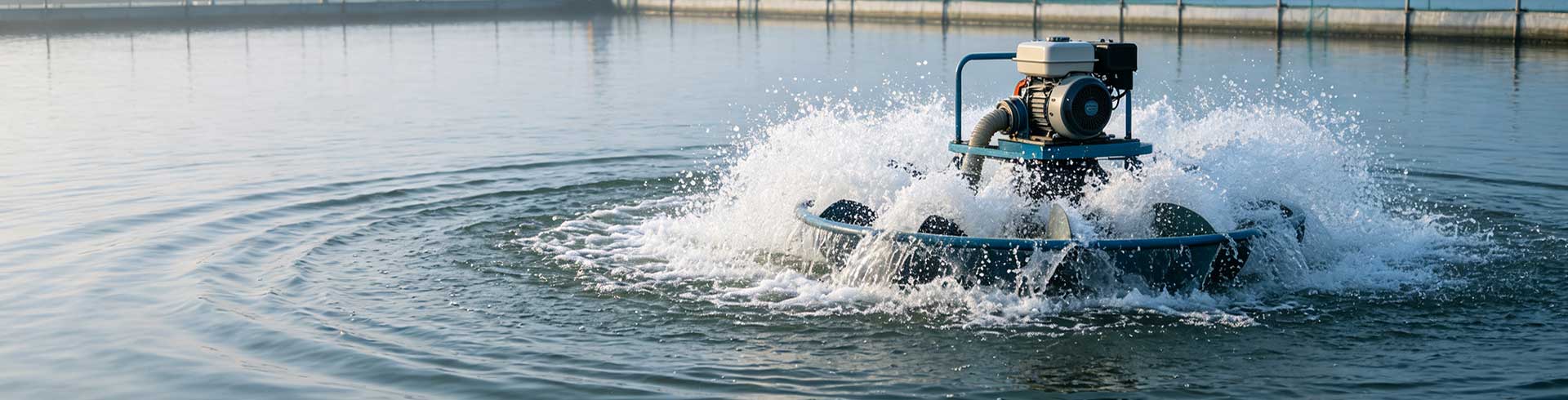
The bigger the splash, the better the oxygen? The truth subverts your cognition
In the aquaculture industry, aerators are essential equipment, and many farmers often have a deep-rooted concept when choosing and using aerators: the bigger the splash, the better the aerating effect. However, is this really the case? This article will explore the working principle of aerators in depth, reveal the true relationship between the size of the splash and the aerating effect, and provide scientific selection and use suggestions to help you optimize the benefits of farming.
First, the core function and principle of the aerator
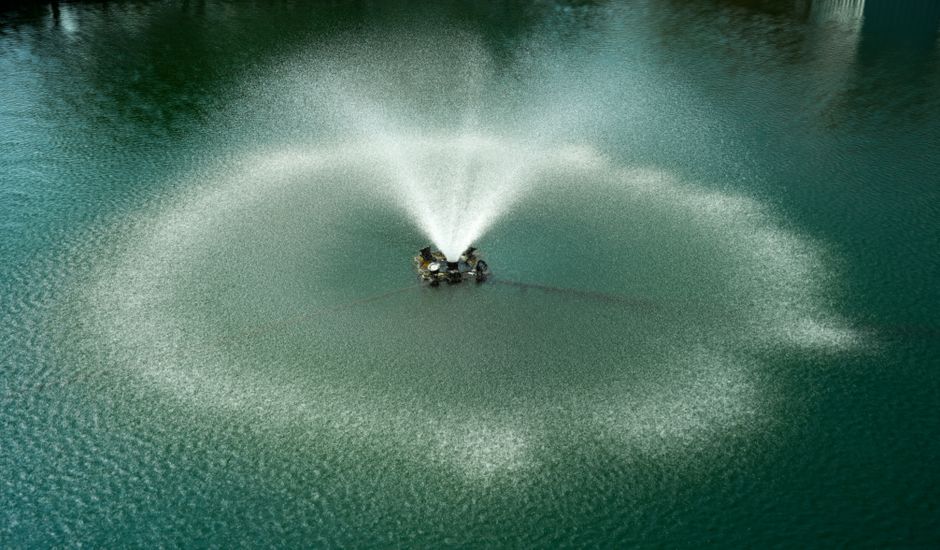
The main function of the aerator is to increase the dissolved oxygen (DO) content in the water body to ensure the respiratory needs of cultured organisms, and at the same time promote water circulation and improve water quality. Common types of aerators include impeller type, waterwheel type, jet type, microporous aeration type, etc. Their working principles are different, but the goal is the same: to improve the efficiency of dissolved oxygen.
1. Three ways to increase oxygen
- Surface Update:
By stirring the water body, the bottom hypoxic water is mixed with the surface oxygen-enriched water to increase the overall dissolved oxygen. - Bubble diffusion:
Air or pure oxygen is injected into water in the form of tiny bubbles. The larger the surface area of the bubbles, the faster the oxygen dissolution rate. - Negative pressure suction:
The negative pressure generated by eddy currents or jets is used to draw air to form a gas-liquid mixture and increase the contact area.
2. Key indicators of dissolved oxygen efficiency
The index to measure the performance of an aerator is
dynamic efficiency
(Dissolved oxygen per unit power consumption, kg O2/kWh) and
oxygenation capacity
(Dissolved oxygen per unit time, kg O2/h). The size of the splash is only an appearance, not directly equivalent to the oxygenation efficiency.
Second, the true relationship between the size of the splash and the oxygenation effect
Many farmers believe that the larger the splash, the more intense the agitation, and the more dissolved oxygen. But scientific research and practical tests show that the size of the splash is not proportional to the effect of oxygenation, and even excessive splash can have negative effects.
1. The advantages and misunderstandings of large splashes
Advantage:
The large splash means that the water body has a wide range of agitation, which can quickly mix the upper and lower water temperatures and promote the volatilization of harmful gases such as ammonia nitrogen.
Misunderstanding:
Many people mistakenly believe that water spray means more oxygen dissolves. In fact, water spray is mainly composed of water droplets and bubbles, but large water droplets and large bubbles stay in the air for a short time and have a small contact area, so the oxygen dissolution efficiency is low. The truly efficient dissolved oxygen relies on the long-term contact of tiny bubbles.
2. Comparison of scientific experiment data
According to the test of a fishery research institute, under the same power, the power efficiency of the microporous aerator can reach 4-6 kg O2/kWh, while the traditional impeller aerator has a large splash, but the power efficiency is only 1.5-2 kg O2/kWh. This shows that the equipment with large splash may not be efficient.
| Aerator type | Splash performance | Power efficiency (kg O2/kWh) | applicable scenario |
|---|---|---|---|
| impeller type | big splash | 1.5-2.5 | Large surface, deep water aquaculture |
| Waterwheel | Medium splash | 2.0-3.0 | Shrimp ponds, shallow water |
| jet type | fine bubbles | 3.0-4.0 | Factory farming |
| microporous aeration | No obvious splash | 4.0-6.0 | high density aquaculture |
3. Hazards of excessive water splashing
- Waste of energy consumption:
The energy is used to create large waves rather than dissolved oxygen, which increases electricity bills. - Stress response:
Intense water flow makes cultured organisms continue to swim, consuming physical strength, increasing stress, and affecting growth. - Sediment damage:
The strong current initializes the bottom of the pool, causing the sediment to suspend and polluting the water quality. - Noise pollution:
Loud noise affects the surrounding environment and can also disturb farmed animals.
III. How to choose an aerator scientifically?
The choice of aerator should be based on factors such as breeding variety, density, water depth, pond shape, etc., rather than blindly pursuing splashes. The following are the key points of selection:
1. According to breeding density
- Low density (conventional):
Impeller type or waterwheel type can be satisfied, pay attention to the installation position. - High density (e.g. intensive culture):
Microporous aeration or jet type is recommended for high efficiency of dissolved oxygen and low energy consumption.
2. Depending on the water depth
- Deep water (> 2 meters):
The impeller type can effectively agitate the bottom layer, but it needs to be combined with the bottom oxygenation. - Shallow water (


