繁体中文
繁体中文 简体中文
简体中文

The king of cost performance: horizontal evaluation of 5 hot-selling aerators
In aquaculture, aerators are important equipment to ensure the amount of oxygen dissolved in water and prevent fish and shrimp from floating. In the face of a wide range of brands and models on the market, farmers often find it difficult to choose. In order to help you find the most cost-effective products, we have selected 5 hot-selling aerators on the market to conduct horizontal evaluations from multiple dimensions such as power, aerobic efficiency, energy consumption, durability, noise, and price, and give objective purchase suggestions.
Evaluation objects and basic parameters
| Model |
type |
Power (kW) |
Applicable area (mu) |
Price (yuan) |
|---|---|---|---|---|
| Impeller aerator A |
impeller type |
1.5 | 3-5 | 1200 |
| Water wheel aerator B |
Waterwheel |
1.1 | 2-4 | 980 |
| Jet aerator C |
jet type |
0.75 | 1-2 | 650 |
| Microporous aerator D |
microporous aeration |
1.5 | 5-8 | 1500 |
| Swell aerator E |
Swell |
2.2 | 6-10 | 2200 |
detailed evaluation
1. Impeller aerator A
Features:
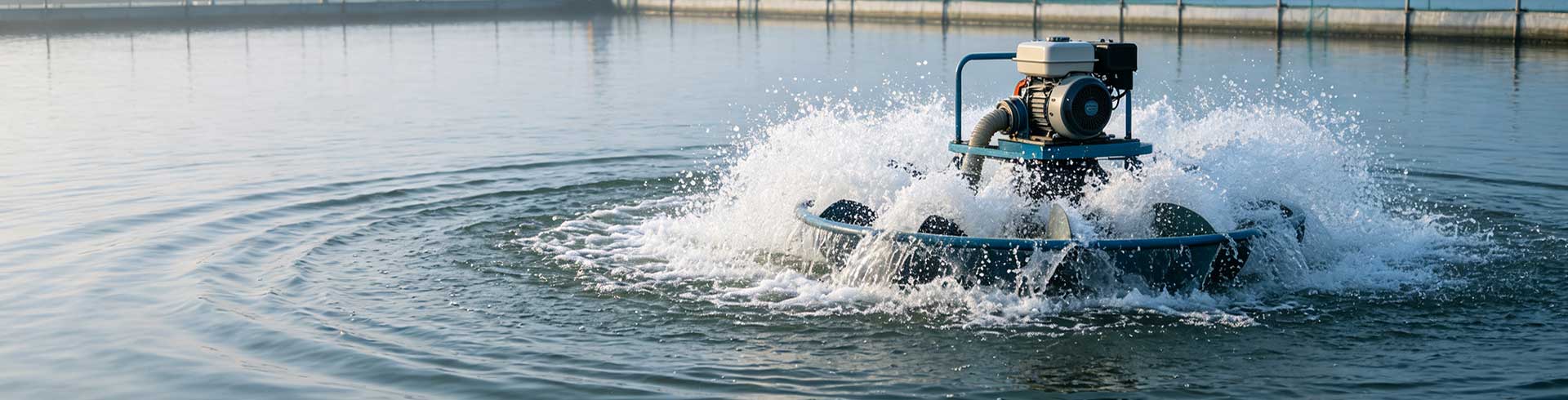
Classic impeller design, through the impeller stirring the water, forming water and waves, high oxygen efficiency, especially suitable for deep-water ponds.
Advantages:
It has strong oxygenation capacity and good exchange effect on bottom water. It has a strong structure and long service life. It is affordable and easy to maintain.
Disadvantages:
Noise is high, water splashes during operation, and it is easy to wet the surrounding equipment; energy consumption is relatively high, making it unsuitable for shallow ponds.
Rating:
Oxygen efficiency 9/10, durability 8/10, noise control 5/10, cost performance 7/10
2. Water wheel type aerator B
Features:
Using leaves to push water to form directional water flow and promote water circulation is suitable for breeding prawns, crabs and other species that require a water flow environment.
Advantages:
The water flow is gentle, without disturbing fish and shrimp; the noise is low; the energy consumption is relatively small; it can be combined with multiple units to form a circulation.
Disadvantages:
The oxygenation depth is limited, and the oxygenation effect on the bottom water is poor; the attachments on the leaves need to be cleaned regularly.
Rating:
Oxygen efficiency 7/10, durability 7/10, noise control 8/10, cost performance 7/10
3. Jet aerator C
Features:
The pump is used to generate high-pressure water flow, and negative pressure suction air is formed through the nozzle, which is mixed and ejected. It has high oxygenation efficiency and can form directional water flow.
Advantages:
Small size, easy installation; high oxygenation efficiency, suitable for small water bodies or factory farming; low noise.
Disadvantages:
Low power, not suitable for large ponds; pumps are prone to clogging and require regular maintenance; prices are relatively high.
Rating:
Oxygen efficiency 8/10, durability 6/10, noise control 8/10, cost performance 6/10
4. Microporous aeration aerator D
Features:
Through the roots blower, the air is pressed into the microporous tube to release tiny bubbles, and the oxygen is increased from the bottom to dissolve the oxygen evenly.
Advantages:
High oxygenation efficiency, and can improve the bottom; low noise, no disturbance to fish and shrimp; low energy consumption, suitable for high-density farming.
Disadvantages:
The installation is complex and requires laying pipes; microporous pipes are prone to clogging and require regular cleaning or replacement; one-time investment is large.
Rating:
Oxygen efficiency 9/10, durability 7/10, noise control 9/10, cost performance 7/10
5. Swell aerator E
Features:
The rotating impeller generates swell, which promotes the water body to circulate up and down, and has a wide range of oxygenation, which is suitable for large water surface breeding.
Advantages:
Large aerated area, suitable for large ponds; can effectively prevent water stratification; strong structure and durability.
Disadvantages:
High power, high energy consumption; high noise; high price.
Rating:
Oxygen efficiency 8/10, durability 8/10, noise control 5/10, cost performance 6/10
Horizontal comparison table
| project |
Impeller A |
Waterwheel B |
Jet C |
Microporous aeration D |
Swell E |
|---|---|---|---|---|---|
| oxygenation efficiency |
high |
middle |
medium and high |
high |
medium and high |
| energy consumption |
high |
middle |
low |
low |
high |
| noise |
big |
small |
small |
small |
big |
| price |
middle |
low |
middle |
high |
high |
| applicable scenario |
deep water pond |
shrimp and crab breeding |
Small water body |
high density aquaculture |
large water surface |
| Comprehensive score |
8.0 | 7.3 | 7.0 | 8.0 | 6.8 |
recommendation
The budget is limited, and the pursuit of practicality:
recommended choice
Impeller aerator A
or
Water wheel aerator B
These two models are affordable, easy to maintain, and can meet the oxygenation needs of most traditional ponds.
High-density farming, focusing on efficiency:
recommend
Microporous aerator D
Although the initial investment is high, the long-term operation energy consumption is low, and the oxygen increase is uniform, which can effectively increase the output.
Large surface aquaculture requires strong oxygenation.
recommend
Swell aerator E
However, the cost of electricity needs to be taken into account.
Special breeding (shrimp and crab, etc.):
recommend
Water wheel aerator B
The water is gentle and doesn't hurt shrimp and crabs.
In short, there is no best aerator, only the most suitable for themselves. It is recommended that farmers choose according to the breed, pond area, water depth, power conditions and budget to achieve the best cost performance.